
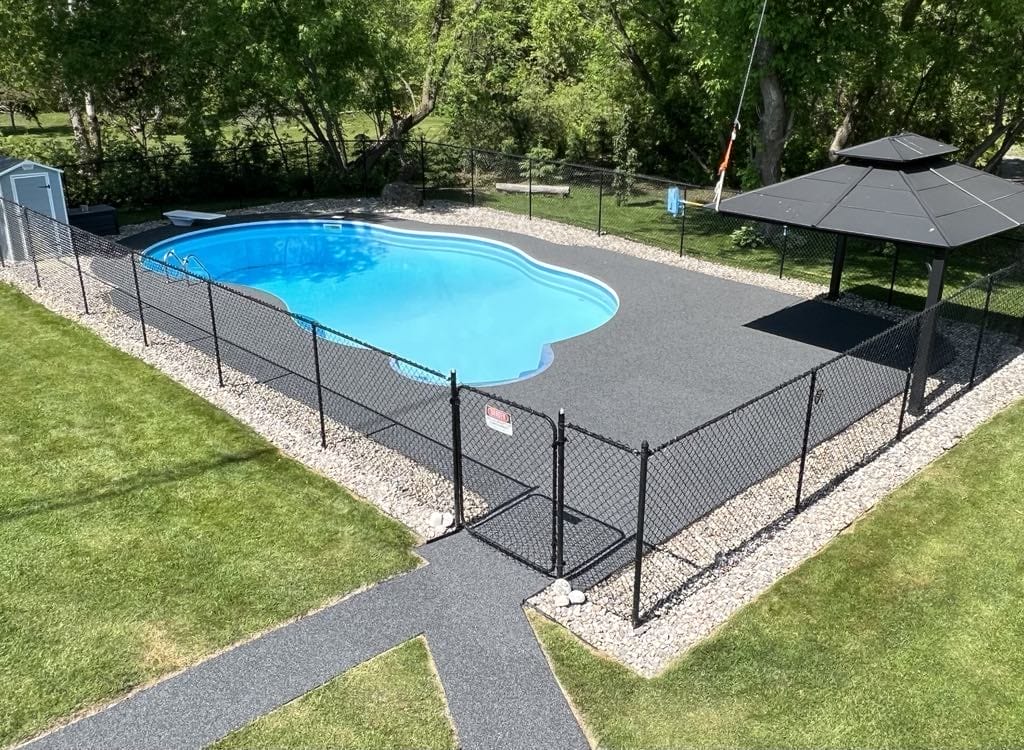
If you start researching pool deck resurfacing, you’ll quickly find a long list of options. Epoxy coatings, stamped overlays, paint systems, acrylic coatings, micro-toppings, and more. But not all of these materials perform well, especially in Ottawa’s climate.
In many cases, homeowners choose pool deck resurfacing instead of replacing their concrete entirely.
On paper they can all sound pretty similar. But when you look at how these materials actually perform around a pool, especially in a climate like Ottawa, the differences become pretty obvious.
So the real question isn’t just what is the best pool deck resurfacing material.
It’s what material performs best around water, sun, and constant freeze-thaw cycles.
From our experience resurfacing pool decks across Ottawa and surrounding communities, the answer is almost always a rubberized pool deck coating system like Rubacrete.
Let’s walk through why.
What Makes a Good Pool Deck Surface?
Before comparing materials, it helps to understand what a pool deck surface actually needs to do.
A pool deck has a pretty demanding job. It needs to be:
- Slip resistant when wet
- Comfortable to walk on barefoot in hot weather
- Durable against weather and pool chemicals
- Flexible enough to handle seasonal movement
- Long lasting, ideally 15+ years
And in Canada specifically, the surface also needs to survive freeze-thaw cycles that can destroy rigid coatings.
This is where many resurfacing materials struggle.
Why Traditional Pool Deck Coatings Often Fail
Many homeowners initially consider options like epoxy, paint, or decorative concrete coatings. These can work in certain environments, but they often run into problems on outdoor pool decks.
Epoxy Coatings
Epoxy is commonly used on garage floors, but around a pool it can create issues.
Epoxy is rigid. When concrete expands and contracts during seasonal temperature swings, the coating can crack or peel. Moisture coming through the slab can also cause delamination.
Another problem is slipperiness. To make epoxy safe around water, installers usually need to add silica sand or aggregate to create texture.
Without it, epoxy can become very slick.
Painted Pool Decks
Paint is usually the cheapest option, but it’s also the shortest-lived.
Paint tends to:
- Fade quickly in sunlight
- Peel when moisture comes through the concrete
- Wear away in high-traffic areas
Many homeowners who call us already tried painting their deck once or twice before looking for a more permanent solution.
Acrylic or Concrete Overlays
Concrete overlays can look attractive at first, especially decorative stamped systems. But they still behave like concrete.
That means they are rigid surfaces placed on top of another rigid surface, which makes them vulnerable to cracking in climates like Ottawa.
Why Rubberized Pool Deck Coatings Perform Better
This is where PIP rubber surfacing systems like Rubacrete really stand out.
Instead of trying to make rigid coatings survive outdoor movement, rubber surfacing works differently. It is flexible by design.
Rubacrete can stretch up to two inches, allowing it to move with the natural expansion and contraction of the concrete below. That flexibility makes a huge difference during freeze-thaw cycles.
It also allows the concrete to breathe, which helps prevent moisture from getting trapped under the coating and causing peeling.
Slip Resistance Matters Around Pools
Safety is one of the biggest concerns homeowners have with pool decks.
Rubacrete is naturally anti-slip, even when wet. The surface texture comes from the rubber material itself, so installers do not need to add sand or aggregate like they would with epoxy coatings.
This means the surface remains consistent and safe across the entire deck.
In fact, Rubacrete was designed as a safety surface, which is why it’s commonly used around pools, splash pads, and playground areas.
A Pool Deck That Stays Cooler in the Sun
Another issue homeowners notice with traditional concrete decks is heat.
Bare concrete and many coatings absorb and hold heat from the sun. On a hot day, the deck can become uncomfortable to walk on barefoot.
Rubacrete performs very differently here. Because the surface is 100 percent EPDM rubber, it does not conduct heat like concrete does.
In many cases the surface can stay up to 20 degrees cooler than traditional concrete decks.
For families with kids running around the pool all summer, this can make a noticeable difference.
Results: Saving a Pool Deck from Demolition
A couple summers ago we received a call from a homeowner who believed their only option was to completely replace their pool deck.
The concrete had years of cracking, discoloration, and general wear from weather and pool chemicals. Several contractors had already told them demolition and repouring the deck was the only realistic solution.
That would have meant major costs and weeks of disruption in the backyard.
When we inspected the deck, we noticed something important. While the surface looked rough, the structural concrete underneath was still solid.
That meant resurfacing was possible.
After thoroughly cleaning and preparing the deck, we hand-troweled the Rubacrete PIP rubber surfacing system across the entire pool deck.
Because the material is flexible and seamless, it filled imperfections and created a completely new surface.
The transformation was dramatic.
What had looked like a worn, cracked pool deck suddenly looked like a brand new installation. The homeowner avoided the cost of demolition and saved weeks of downtime. Instead of tearing everything out, the entire deck was resurfaced in one day.
And the result was a cooler, slip-resistant, durable pool deck designed for long-term performance.
You can see examples of resurfacing projects here.
How Long Does Pool Deck Resurfacing Last?
A properly installed Rubacrete surface typically lasts 15 to 20 years or more.
We also back our residential pool deck installations with a 10-year warranty.
Maintenance is very simple. In most cases we recommend:
- Pressure washing once in the spring
- Pressure washing once in the fall
That’s usually enough to keep the surface looking clean and well maintained.
How Much Does Pool Deck Resurfacing Cost?
Pool deck resurfacing costs can vary depending on preparation work, deck condition, and design details.
For most projects in Ottawa, homeowners can expect approximately:
$15 per square foot installed
Additional costs may apply if the project includes:
- Concrete repairs
- Surface build-up
- Decorative borders
- Coping wraps
- Custom design work
Even with these additions, resurfacing is usually far more cost-effective than tearing out and repouring an entire pool deck.
When Is Pool Deck Resurfacing a Good Option?
Resurfacing works best when the existing concrete structure is still sound.
It’s usually a great option if your pool deck has:
- Surface cracks
- Fading or discoloration
- Minor heaving or wear
- Old coatings that are peeling
- Slippery concrete surfaces
In many cases, a deck that looks beyond saving can actually be restored with the right resurfacing system.
Pool Deck Resurfacing in Ottawa
If you’re considering resurfacing your pool deck in Ottawa, Kanata, Nepean, Orleans, Barrhaven, Stittsville, Manotick, or surrounding communities, choosing the right material makes a huge difference.
Rubacrete’s rubberized resurfacing system is specifically suited to Canadian climates because it:
- Handles freeze-thaw movement
- Stays cooler in the sun
- Provides natural slip resistance
- Installs quickly with minimal downtime
- Lasts 15 to 20 years or more
For many homeowners, it’s the most durable and practical resurfacing solution available.
Thinking About Resurfacing Your Pool Deck?
If your pool deck is cracked, worn, or slippery, it may not need to be replaced.
In many cases, a professional resurfacing system can completely transform the space while saving time and cost.
Rubacrete specializes in durable rubber pool deck resurfacing designed for Ottawa’s climate.
If you’re curious whether resurfacing is an option for your deck, reach out to our team for an inspection and recommendation.
Your existing deck might have more life left in it than you think.
Frequently Asked Questions About Pool Deck Resurfacing
What is the best material for resurfacing a pool deck?
Is it better to resurface or replace a pool deck?
How long does pool deck resurfacing last?
Is a rubber pool deck slippery when wet?
Does pool deck resurfacing get hot in the sun?
How much does pool deck resurfacing cost?
Can cracked concrete pool decks be resurfaced?
How long does pool deck resurfacing take?
Related Resurfacing Services
Rubacrete offers more than just pool deck resurfacing. If you’re upgrading your outdoor space, you may also want to consider:
- Deck and Patio Resurfacing
- Porch and Step Resurfacing
- Garage and Driveway Resurfacing
See real examples of completed projects and get inspiration for your own space.
Residential Surfacing Gallery


